Changing Locks Between Tenants in Georgia: A Landlord & Renter Guide
When a tenant moves out, their key doesn’t. Neither do the copies they gave to a partner, a roommate, a dog walker, or a contractor who came to fix the disposal two years ago. Nobody can say for sure how many working keys to a rental are floating around — which is exactly why changing the locks between tenants is one of the smartest, cheapest turnover moves a landlord can make.
Changing Locks Between Tenants: The Landlord Checklist
Changing locks between tenants is one of the cheapest ways a landlord can lower risk. Old tenants, their friends and contractors may all still hold copies, and you have no way to know who.
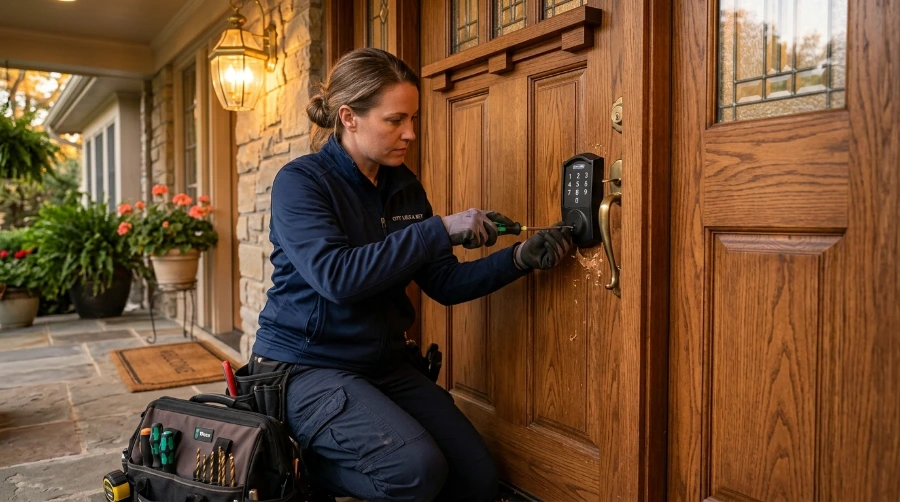
For most rentals, changing locks means rekeying rather than replacing hardware: it is faster and costs less. Do it after move-out and before the new tenant gets keys, log the date, and note who holds every key. Georgia landlords can find general landlord-tenant guidance from the Georgia Department of Community Affairs; check your lease and local rules for anything specific to your property.
Managing several units? Ask us about a master key setup that makes changing locks between tenants quicker. Call (478) 382-5517.
This guide covers the practical side: rekey vs. replace, who usually pays, master key systems for multi-unit properties, and smart-lock options for rentals.
Important: this is general information about locks and locksmithing, not legal advice. Landlord-tenant law varies, leases differ, and local rules can add requirements. For questions about your legal obligations in Georgia, talk to a Georgia attorney or your local housing authority. Managing a turnover in Macon? Call Macon Locksmith GA at (478) 382-5517.
Why It Matters More Than Most Landlords Think
Think about who might hold a working key to a unit right now: the departing tenant, their ex-partner, a former roommate, a cleaning service, a maintenance contractor, a neighbor who watered plants once. Rekeying between tenants resets all of that to zero — one known set of keys, in known hands.
Beyond security, there’s liability. If a former tenant (or someone they gave a key to) walks into a unit occupied by a new tenant, the landlord will be asked why the locks were never changed. A dated rekey invoice is cheap documentation that the turnover was handled properly. Keep reading for why that record matters.
The Georgia Picture (General Information)
Georgia doesn’t have a single, widely-known statewide statute that says “landlords must rekey between tenants” the way a few other states do. That doesn’t mean there are no rules — it means the answer lives in several places:
- The lease. Many leases address locks directly: who can change them, whether the tenant needs permission, and who pays. The lease is usually the first document to check.
- Local ordinances. Some Georgia cities and counties have housing or property-maintenance codes with their own requirements. Macon-Bibb County rules can differ from, say, Atlanta’s.
- Subsidized housing program rules. Section 8 and other programs can impose their own turnover and security standards on participating landlords.
- General negligence principles. Even where no specific statute applies, landlords have a general duty to keep rental property reasonably safe — and failing to change locks between tenants is the kind of fact that gets scrutinized if something goes wrong.
The practical takeaway: “the law doesn’t explicitly require it” is not the same as “it’s fine to skip it.” Most experienced landlords rekey between tenants as standard practice regardless. For the legal side of your specific situation, consult a Georgia attorney — this article can’t cover it.
Rekey vs. Replace for Rentals
For turnover work, rekeying is usually the right call — and it’s worth understanding why. Rekeying changes the lock’s internal pins so old keys stop working; the hardware stays. It’s faster and cheaper than replacing the whole lock, and when the existing hardware is in good shape, it’s just as secure. Our rekey vs. replace guide walks through the full comparison.
Replace the hardware instead when:
- The locks are visibly worn, loose, or low-quality to begin with
- There’s no deadbolt on an exterior door (a turnover is the perfect moment to add one)
- You want to upgrade to a restricted keyway so tenants can’t make their own copies at a kiosk
- The property is moving to smart locks (more on that below)
Many landlords use a simple policy: rekey every turnover, replace hardware when it’s worn or below standard. Simple, defensible, and easy to document.
Who Pays: Landlord or Tenant?
In practice, changing locks between tenants is treated as a landlord turnover cost — part of preparing the unit for the next renter, alongside cleaning, paint touch-ups, and maintenance. Most leases reflect this, and many landlords simply build it into their turnover budget.
Where it gets less clear:
- Mid-lease lock changes requested by the tenant (lost keys, a breakup, a roommate situation) — leases often assign this cost to the tenant, or split it.
- Tenant-installed locks. Many leases prohibit tenants from changing locks without written permission — and usually require that the landlord get a copy of any new key. A tenant who changes locks unilaterally can be in breach of the lease.
- Security deposits. Whether lock-change costs can come out of a deposit depends on the lease language and the circumstances — another reason the lease matters.
The pattern: between-tenant changes are the landlord’s business; mid-lease changes depend on the lease and who asked for them.
Multi-Unit Options: Master Key Systems and Keyed-Alike
For duplexes, apartment buildings, and multi-unit portfolios, key management gets more complex — and master key systems exist for exactly this:
- Master key system. One master key opens everything (units plus common areas); each tenant’s key opens only their unit and shared spaces. The landlord or manager carries the master. When a tenant leaves, only their unit’s cylinder gets rekeyed — the master key keeps working.
- Keyed-alike vs. keyed-different. Keyed-alike means one key opens multiple locks (convenient for a landlord’s own properties, or for common-area doors). Keyed-different means each lock has its own key. Most multi-unit setups use keyed-different unit cylinders under one master system.
- Restricted keyways. For rentals, these are worth serious consideration: the blanks are controlled, so tenants can’t walk into a hardware store and duplicate their key. Key control is half the battle in rental turnover.
For landlords with several units, a master key system plus a restricted keyway is the professional-grade setup — and our commercial locksmith services cover multi-unit properties.
Smart Locks for Rentals: Codes Instead of Rekeying
Smart locks change the turnover math. Instead of rekeying between tenants, you change the access code:
The appeal for landlords:
- No locksmith visit needed between tenants — change the code remotely or on the keypad
- Temporary codes for maintenance and showings, deleted afterward
- An audit trail of entries on many models
- No physical keys to collect, chase down, or wonder about
The trade-offs:
- Higher upfront cost per door than a standard deadbolt
- Batteries die — someone has to stay on top of them, or specify in the lease whose job that is
- Tenants need basic tech comfort; not every renter wants an app-connected lock
- Wi-Fi-dependent features fail when the internet does (keypad codes usually still work locally)
A middle path many landlords take: smart locks on the main entry, standard deadbolts elsewhere — or smart locks only on higher-turnover units. Our smart lock vs. deadbolt guide compares the options in depth.
Document Everything
This is the unglamorous part that matters most if there’s ever a dispute:
- Keep the rekey invoice with the date, the property address, and which doors were serviced.
- Log key issuance — who got keys, how many, and when they were returned.
- Note code changes for smart locks with dates.
- Photograph the condition of locks and doors at move-in and move-out, alongside your usual turnover photos.
A dated paper trail showing locks were changed between every tenant is one of the simplest liability-reduction moves a landlord can make. It costs nothing beyond the filing.
Need a Locksmith Now?
Our Macon locksmith team can help 24/7. See our lock rekeying and residential locksmith services pages, or call (478) 382-5517 for an upfront quote.
Key Takeaways
- Rekeying is usually the fastest way of changing locks between tenants.
- Time changing locks for after move-out and before you hand over new keys.
- Log the date and every key holder each time you’re changing locks.
- A master key system can make changing locks across many units simpler.
- Check your lease for any terms about changing locks.
Frequently Asked Questions
Does Georgia require landlords to change locks between tenants?
There is no single, widely-known Georgia statute that explicitly mandates rekeying between tenants the way some states have. Requirements can come from the lease itself, local ordinances, or subsidized-housing program rules. Many landlords rekey every turnover as standard practice regardless. This is general information, not legal advice — for your specific obligations, consult a Georgia attorney.
Rekey or replace for a rental turnover?
Rekey, in most cases — it’s cheaper and just as secure when the existing hardware is sound. Replace when locks are worn, low-quality, missing deadbolts, or when you’re upgrading to restricted keyways or smart locks.
Can a tenant change their own locks?
Usually only with the landlord’s written permission — most leases prohibit it or require the landlord to receive a copy of the new key. A tenant who changes locks unilaterally risks breaching the lease. Tenants who want a lock changed should ask in writing and keep the response.
What is a master key system?
A keying arrangement where one master key opens all locks in the system (units plus common areas), while each tenant’s key opens only their own unit and shared spaces. When a tenant leaves, only their unit’s cylinder is rekeyed — the master key keeps working. It’s the standard setup for multi-unit properties.
The Bottom Line
Changing locks between tenants is one of the highest-value, lowest-cost things a landlord can do at turnover: it resets unknown key copies to zero, it’s cheap documentation of due diligence, and tenants notice and appreciate it. Rekey when the hardware is sound, replace when it isn’t, consider restricted keyways or smart locks for multi-unit properties, and keep the invoice.
Turning over a rental in Macon? Call Macon Locksmith GA at (478) 382-5517 — rekeying, master key systems, and smart-lock setups for landlords and property managers.